A company may be able to recruit a strong manager with an attractive compensation package, but retaining them for the long term requires much more. A sufficiently challenging arena, a culture of empowerment, and a clear development pathway are emerging as new competitive advantages in the race for talent.
Top Talent Does Not Have to Be Perfect Before Being Given an Opportunity
According to the PwC CEO Survey 2025, CEOs across the Asia-Pacific region are increasingly diversifying their business presence across multiple countries and regions. Many management experts believe that as companies expand internationally, competitive advantage comes not only from business strategy, but also from building a “glocal" leadership team – leaders with a global mindset and sufficient local understanding to adapt to each market.

As companies expand internationally, they need to develop leaders with a global mindset who also understand and can adapt to each local market. Photo: Shutterstock
Against this backdrop, experienced managers are also facing a new question: continue excelling in their current roles, or take on bigger challenges to prepare themselves for leadership positions with broader responsibilities.
For companies pursuing a Go Global strategy, leadership development and talent attraction are no longer simply matters of succession planning, but have become part of the growth strategy. ROX Group has also chosen to take this approach.
After three decades of development, ROX Group has built a diversified ecosystem spanning real estate, energy, services, and other sectors, creating an environment in which managers can take on projects of increasing scale and complexity.
According to a representative of ROX Group's Talent Development function, the company's appeal lies not only in the scale of its operations or its Go Global journey, but also in its culture of empowerment – where capability and ambition are valued more highly than years of experience or job titles.
“Many people think they have to be perfect before they are given an opportunity. But we believe the opposite. It is precisely opportunities of sufficient scale that enable people to grow significantly," the ROX Group representative shared.
This philosophy is put into practice by entrusting capable employees with the leadership of key projects, involving them in succession planning, or assigning them roles with a broader scope of influence. The prerequisite is not the number of years of experience, but the ability to deliver results and the willingness to take on difficult assignments.
This is also how the company prepares its people for areas that demand increasingly advanced management capabilities, such as large-scale real estate development, energy, and international projects.
According to the ROX Group representative, it is precisely this diversity of challenges that enables managers to move beyond the boundaries of their own expertise, learn how to connect multiple resources, make decisions in complex contexts, and gradually develop from managing a single function into leaders capable of guiding an entire organization.
In other words, while training helps build capabilities, it is real-world experience that ultimately shapes leadership resilience and judgment.
Global Leaders – Preparing the Next Generation of Leaders for the Go Global Journey
As Vietnamese companies increasingly expand their operations internationally, expectations of leadership teams are also changing. In addition to professional expertise, managers need the ability to adapt to multicultural environments, lead teams across borders, and manage projects of increasing scale.
This is why ROX Group does not view talent development as a series of short-term training courses, but rather as a continuous development journey.
In 2025 alone, the Group conducted 320 training courses with 12,708 participant attendances, equivalent to 2,505 training hours and more than 50,000 learning hours across the system. The programs were designed at multiple levels, from strengthening management capabilities and developing leadership skills to equipping employees with new capabilities in areas such as AI, data management, and customer experience management.
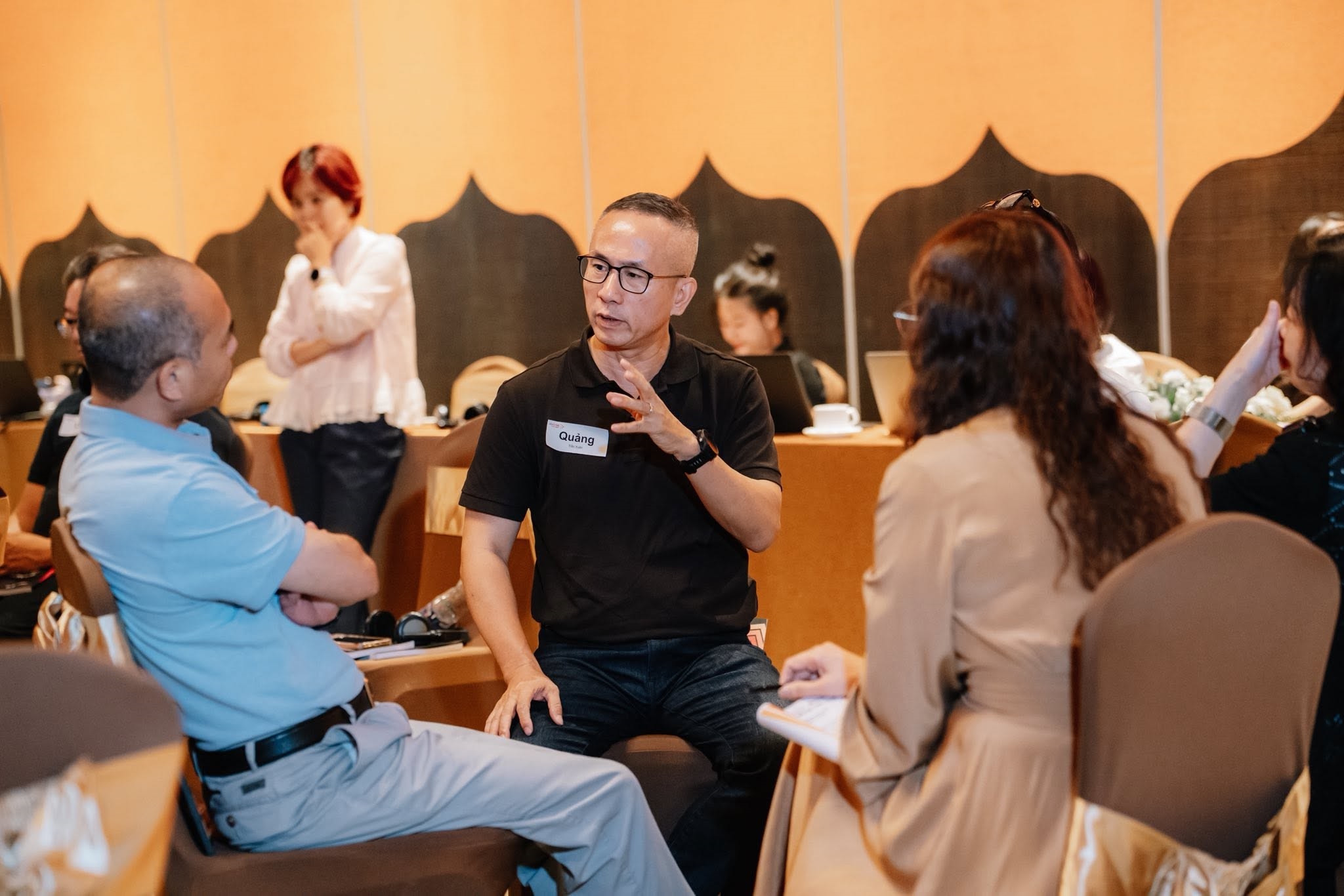
Senior leaders at ROX Group have defined development pathways and individually tailored training plans
Senior leaders participate in the Leading The Way program with support from McKinsey. Managers also have access to programs such as HR for Non-HRM and AI Literacy in collaboration with Microsoft and SoftwareOne. Alongside training, the Group carries out succession planning, job rotations, and practical assignments to prepare its next generation of leaders.
Within this framework, Global Leaders has been developed as a program for managers who are ready to enter a new stage in their careers.
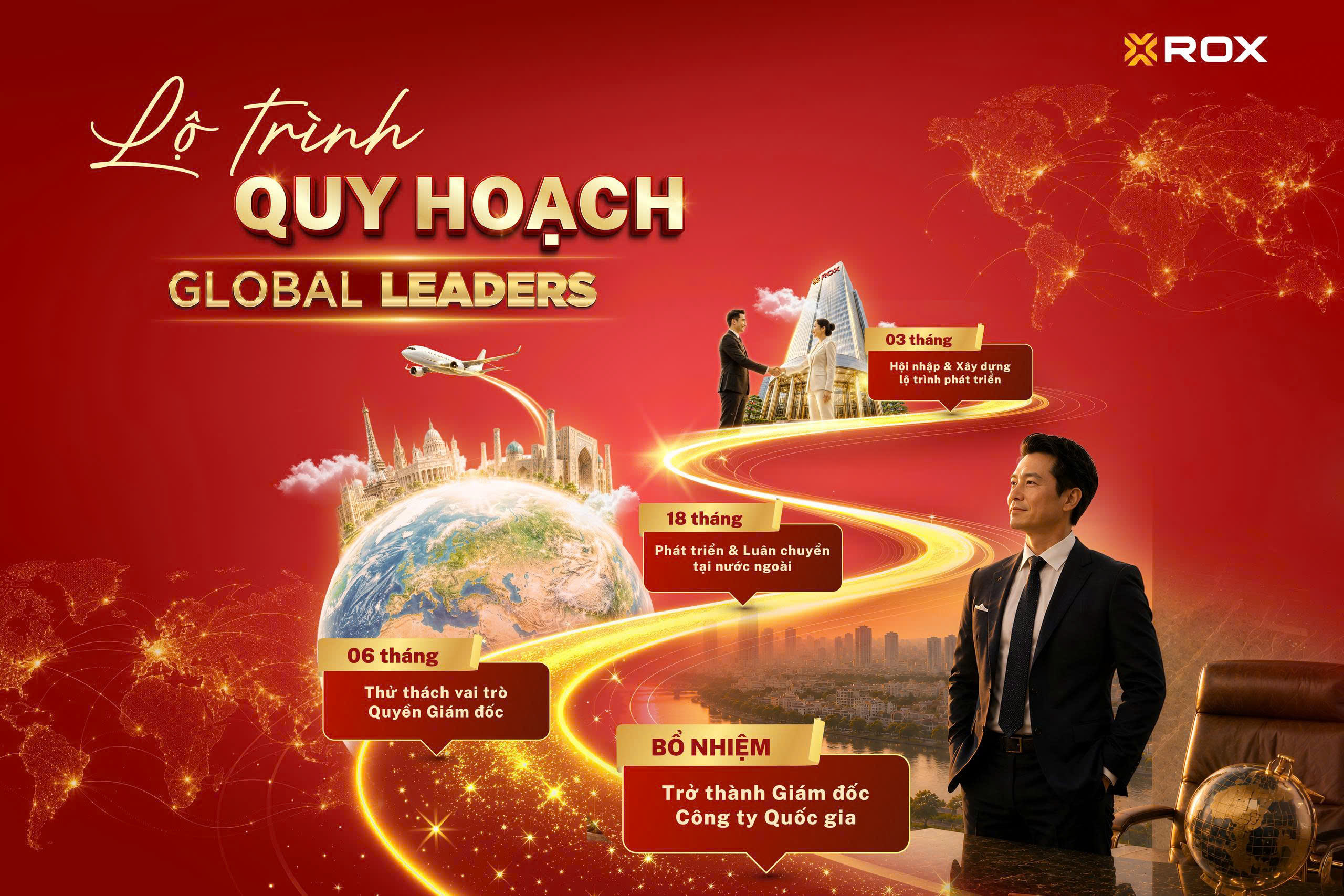
Unlike short-term training programs, Global Leaders is designed as a 24-month development pathway aimed at preparing leaders for the Group's Go Global strategy. Each stage is tied to a new level of management capability, from developing an individual development roadmap and participating in strategic projects to undertaking rotations in international markets and assuming stretch roles before being considered for formal appointment.
According to a ROX Group representative, Global Leaders does not lower the standards expected of a leader; rather, it shortens the journey and accelerates exposure to real-world environments needed to reach those standards. Over 24 months, participants are challenged through strategic projects, international environments, and roles of increasing complexity. The ultimate goal is to prepare a generation of leaders ready for the Group's Go Global journey.
“Once a manager has built a solid foundation of experience, what they need is no longer simply a higher position, but an environment broad enough for them to continue making their mark," the representative shared.
In today's competition for talent, companies can attract high-caliber professionals through many different factors. But for them to choose to stay and grow with an organization over the long term, what matters most is being given opportunities substantial enough to develop alongside the organization itself. After all, a career turning point does not begin with a new title, but with the decision to take on a bigger challenge.