As technical standards for building operations become increasingly standardized, differentiation lies in service experience. The receptionist's smile has emerged as a critical touchpoint, representing friendliness, professionalism, and serving as a “soft" management tool that helps build trust with residents.
A Small Touchpoint with a Significant Role
Similar to operational models in the hospitality industry, receptionists in residential buildings act as the “frontline" of the resident experience. This is the touchpoint with the highest frequency of interaction, where hundreds of exchanges take place daily: from greetings and guidance to receiving feedback and handling arising situations. All information flows and initial experiences converge at this department, making the receptionist not merely a welcoming role but the “face" of the entire operations system.
However, this is also a high-pressure position, as it involves not only receiving information but also absorbing residents' negative emotions, including frustrations that may not directly stem from service quality. In times of conflict, the reception desk often becomes the first “pressure release" point for residents.

The building receptionist serves as a critical emotional touchpoint.
Therefore, according to Ms. Pham Thi Thuy, Director of Residential Operations Management at TN Property Investment and Real Estate Management Joint Stock Company (TNPM), within the 4S standards for professional receptionists, a smile is not merely a social expression but an effective emotional regulation tool. A calm demeanor, a proper greeting, or a timely smile can quickly ease tension and establish a positive foundation before issues are addressed operationally.
Residents evaluate services not only by final outcomes but also by how they are treated throughout the experience journey. A technical issue can be accepted if it is received and responded to with sincerity. Conversely, even when processes are executed correctly, a lack of goodwill in interactions can still leave a negative impression.
Real-life stories at the Sapphire Goldmark City complex, operated by TNPM, clearly illustrate this. There have been instances where residents reacted strongly when reminded to comply with regulations or were upset by disturbances from neighbors and approached reception with a tense attitude. Instead of responding defensively, TNPM's reception team adopted a softer approach: listening, explaining, and maintaining patience.
Results did not come immediately, but over time, this persistence created change. Some previously demanding residents have become more approachable, engaging in friendly conversations. Others have even brought small gifts to the reception staff.
Standardization to Enhance Organizational Capability
Also, according to Ms. Pham Thi Thuy, if smiles and interactions remain merely individual reflexes, service quality will depend on specific individuals. Without a common standard, resident experience cannot be consistently maintained and is nearly impossible to scale across the system.
TNPM has standardized receptionist service quality through the 4S standards of the hospitality industry, ensuring a consistent resident experience across the system. In this framework, Smile creates the first emotional touchpoint, fostering goodwill and opening positive interactions. Smart reflects professionalism through polished demeanor, standardized communication, and respect for residents. Speed requires prompt responses and accurate handling to optimize experience. Sincerely creates lasting differentiation by ensuring each resident receives genuine care.
At TNPM, receptionist training is designed in multiple layers. The onboarding phase helps staff understand their role within the overall operations. This is followed by professional training covering specific content such as feedback handling procedures, communication skills, greeting standards (verbal, eye contact, smile), and scenario-based problem-solving. Notably, on-the-job training enables new staff to adapt to real-world conditions, where situations often arise beyond scripted scenarios.
According to TNPM representatives, the essence does not lie in “performing" a smile but in understanding its true nature. “It is not an act, but the result of emotional discipline. When staff are fully equipped with listening, empathy, and problem-solving skills, they have the foundation to sustain a positive attitude consistently," said Ms. Thuy.
This is also part of TNPM's goal of achieving operational excellence, where service experience is not created at a single moment but accumulated over time. “A smile may not immediately resolve an issue, but consistency in every interaction gradually builds trust and positive perceptions among residents," emphasized the Director of Residential Operations Management at TNPM.
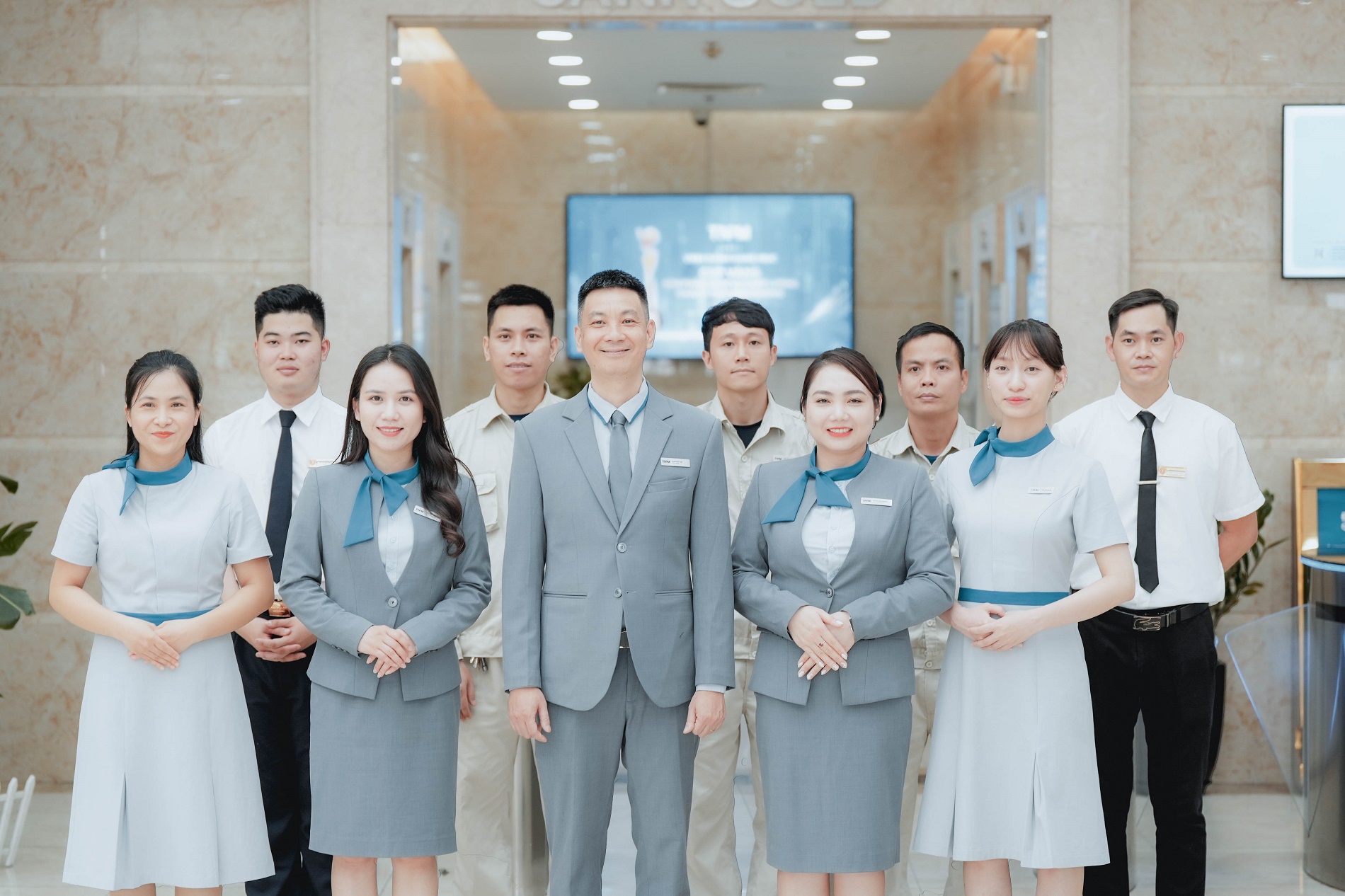
TNPM is making efforts to standardize services toward operational excellence.
Currently, TNPM operates seven high-rise residential complexes in Hanoi, serving more than 7,900 households. Efforts to standardize services and enhance resident experience are also part of the broader ROX ecosystem, particularly as ROX Group celebrates its 30-year milestone of Creation – Expansion. This is not only an occasion for the Group to reflect on its development journey but also to reaffirm its commitment to elevating quality of life and community experience. Within this broader picture, TNPM contributes to realizing these commitments through every service touchpoint, from operations to resident care.
A building may be constructed through technical standards, but living experiences are shaped by human interactions. Among them, the smile at the lobby—simple yet enduring—helps create a friendly living environment where residents feel respected, connected, and a true sense of belonging.